An essential but fragile infrastructure
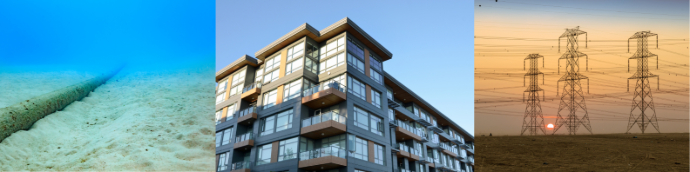
In Africa, the vast majoriy of Internet access relies on an invisible yet crucial infrastructure: submarine cables. These massive fiber optic lines laid across ocean floors carry about 99% of global Internet traffic. Africa is currently connected to the rest of the world via around twenty submarine cables, most of which land in major coastal cities such as Lagos, Accra, and Cape Town.
However, this dependence also poses a vulnerability. Any damage or disruption to these cables can lead to immediate and significant consequences. In March 2024, for instance, four major cables (WACS, MainOne, SAT-3, and ACE) were damaged off the coast of West Africa. The result: widespread service outages and slowdowns in several countries, including Nigeria, Ghana, and Côte d’Ivoire (TechCrunch, 2024).
A concerning geographic imbalance
Another issue is that cable-based connectivity mainly benefits urban and coastal areas. Landlocked countries like Mali, Niger, or the Central African Republic do not have direct access to submarine cables. They rely on expensive and sometimes unstable terrestrial connections, which exacerbates digital inequality. This geographic imbalance is a barrier to digital inclusion, as it hampers the widespread availability of high-speed Internet across the continent.
Additionally, maintaining these terrestrial infrastructures is challenging. Conflicts, extreme weather conditions, and a lack of investment in domestic networks hinder the effective delivery of bandwidth from the coasts to inland regions.
Large-scale projects in development
To addresse these challenges, several large-scale initiatives are underway. The2Africa, lancé par un consortium comprenant Meta, China Mobile et d’autres partenaires, vise à créer l’un des plus grands câbles sous-marins du monde. Long de 45 000 kilomètres, il connectera 33 pays d’Afrique, d’Europe et du Moyen-Orient, avec une capacité bien supérieure à celle des infrastructures actuelles. L’objectif est de renforcer la résilience des connexions africaines et de mieux desservir les zones actuellement mal couvertes. Fin 2025, La construction du câble sous-marin 2Africa est achevée.
Building digital resilience
In summary, while submarine cables play a central role in Africa’s Internet connectivity, overreliance on them poses a risk to stability. Each incident highlights how vulnerable the system remains. Ensuring long-term, reliable connectivity requires not only strengthening these infrastructures but also developing complementary solutions that are more flexible and adapted to local conditions. Only then can the continent build a resilient, equitable, and future-proof digital infrastructure.
 Duddal
 SOS Village d'Enfants Niger

What Role Does Dependence on Submarine Cables Play in Africa’s Connectivity Stability?