Like many companies, we know that it’s helpful to regularly renegotiate our contracts and subscriptions to reduce costs. But in practice, certain issues can easily fall by the roadside.
As part of our Responsible Digital Initiative, , in collaboration with Agence Lucie, we have begun to view our suppliers in a new light: not only in terms of price and service, but also in terms of their own environmental and sustainability commitments.
Among the contracts that our leadership had long wanted to review, there was one in particular: the electricity contract, which was then provided by EDF (long-standing French supplier). We had had one goal in mind for several years: to switch to a green, locally sourced plan.
Leaving EDF: a leap into the unknown?
Clearly, we had a preconceived notion that many people share: “What’s the point of comparing? EDF is probably hard to beat; looking for a better option will just waste our time without really getting us anywhere.”

Added to this is the fact that electricity isn’t like other subscription services. Switching insurance providers or phone carriers seems relatively straightforward to us. Switching electricity providers, however, can seem more daunting: EDF, the regulated rate, how the energy market works… the subject quickly becomes technical.
We also had another deeply held belief: green electricity would probably cost a lot more. After all, we were looking for a plan that met stricter environmental standards. So we expected to have to accept a certain additional cost in the name of our commitments.
Our Responsible Digital approach ultimately led us to verify whether we were right.
Comparing offers: easier said than done
Brigitte, an administrative assistant at Mind and Go / DataCup, took on the task of researching vendors and comparing the available offers.
This held a few surprises for us: some suppliers didn’t even want to review our proposal because of their own criteria for evaluating companies. In other words, switching suppliers wasn’t as easy as we had expected.
But we continued our research and compared the offers based on several criteria: price, of course, but also the source of the electricity, the supplier’s commitments, and its local presence.
That is why we chose LLUM, a supplier based in the Pyrénées-Orientales (our department!) that sources 100% renewable electricity from producers in Occitanie, primarily through hydroelectricity, solar power, and anaerobic digestion.
The result we hadn't anticipated: -36%
As mentioned earlier, we therefore expected to pay a little more by switching to a green electricity plan.
Exactly the opposite happened.
Our annual electricity bill has dropped by 36% compared to our previous contract.
Ultimately, this experience showed us above all that certain beliefs about the environment are simply no longer relevant.
We thought a green plan would necessarily be more expensive. We also thought that by staying with our long-time provider, we probably already had a plan that would be hard to improve upon.
We would never have known that these two ideas were wrong if we hadn't taken the time to compare them.
So, if you haven't shopped around for a new electricity plan in several years, perhaps the first step isn't necessarily to switch providers.
It's just a matter of checking.
Why Green Electricity Can Be Competitive Today
Our experience has led us to ask ourselves a simple question: How can a greener, more local offering also be less expensive?
Part of the answer lies in how some providers purchase electricity today. Some green providers enter into long-term contracts directly with renewable energy producers. These contracts, known as PPAs (Power Purchase Agreements), allow both the producer and the provider to set their terms for several years and reduce their dependence on market fluctuations.
That is exactly the case with LLUM. The provider has entered into a PPA with Visolar, an agrivoltaic electricity producer based in Perpignan. Visolar operates photovoltaic greenhouses, vineyards equipped with solar panels, and other agricultural facilities in the Pyrénées-Orientales. The electricity generated is sold directly to LLUM as part of a long-term partnership.
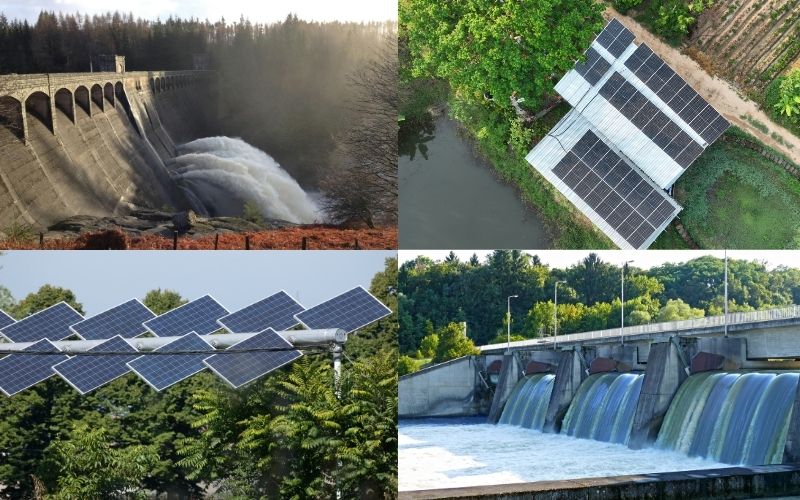
Hydropower, solar power, and agrivoltaics: different ways to generate renewable electricity. In France, agrivoltaics is regulated by law: solar panels must not replace agricultural activity, which must remain the primary use of the land.
For Visolar, this makes it possible to know who to sell its electricity to and under what terms over several years. For LLUM, it is a way to source electricity directly from a local renewable energy producer while gaining better control over the price of the electricity it resells to its customers.
Of course, this does not mean that a green plan will always be cheaper than a standard plan. The rate always depends on your usage profile, the contracted power, the contract term, and market conditions.
But this example clearly shows why renewable electricity and competitive prices are no longer necessarily at odds with one another.
Price wasn't our only criterion
While the financial results surprised us, that wasn't the only reason we switched suppliers.
Originally, our approach was primarily driven by our commitment to responsible digital technology. This commitment extends beyond just our devices or our digital habits: it also encourages us to consider what we buy, from whom, and under what conditions.
So we compared the offers based on more than just price.
The first point is, of course, the source of the electricity. A green energy plan must be accompanied by Guarantees of Origin, which certify that an equivalent amount of renewable electricity has indeed been generated and fed into the grid.
But to take this a step further, it may be worth looking at how the supplier actually sources its energy: does it purchase only Guarantees of Origin separately, or does it work directly with renewable energy producers?
Labels such as VertVolt, supported by ADEME, also make it easier to identify the most committed providers.
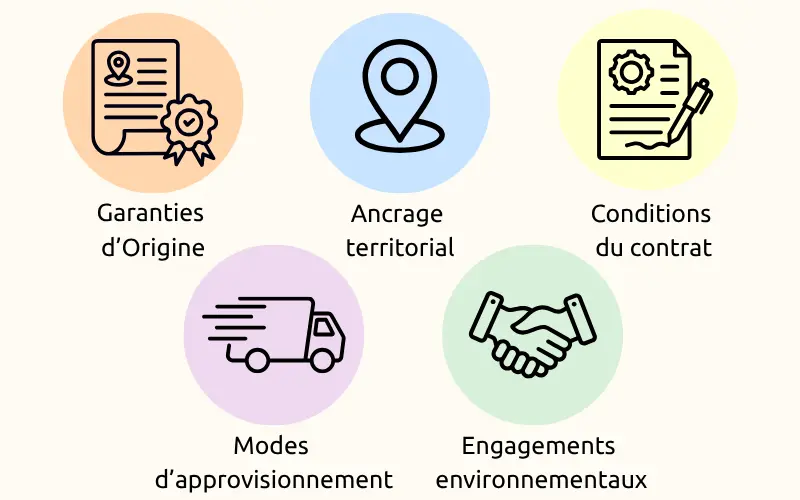
We therefore recommend that you don't base your decision solely on the price per kWh. In summary, here are the key points to consider:
- Guarantees of Origin,
- Sourcing methods,
- Local roots,
- Environmental commitments
- and of course terms and conditions.
The right thing to do: compare
Our experience does not mean that a green plan will always be cheaper, nor that LLUM will be right for every business.
It simply taught us that it's better to compare than to assume.
In our case, this approach allowed us to find an offer that was more in line with our commitments, more locally focused… and 36% cheaper than our previous contract.
If you haven't shopped around for a new electricity plan in several years, start there: compare rates.
 Duddal
 SOS Children's Villages Niger



Green electricity: We thought we'd be paying more, but our bill went down by 36%