
Democratic Republic of the Congo

Elementary School Teachers
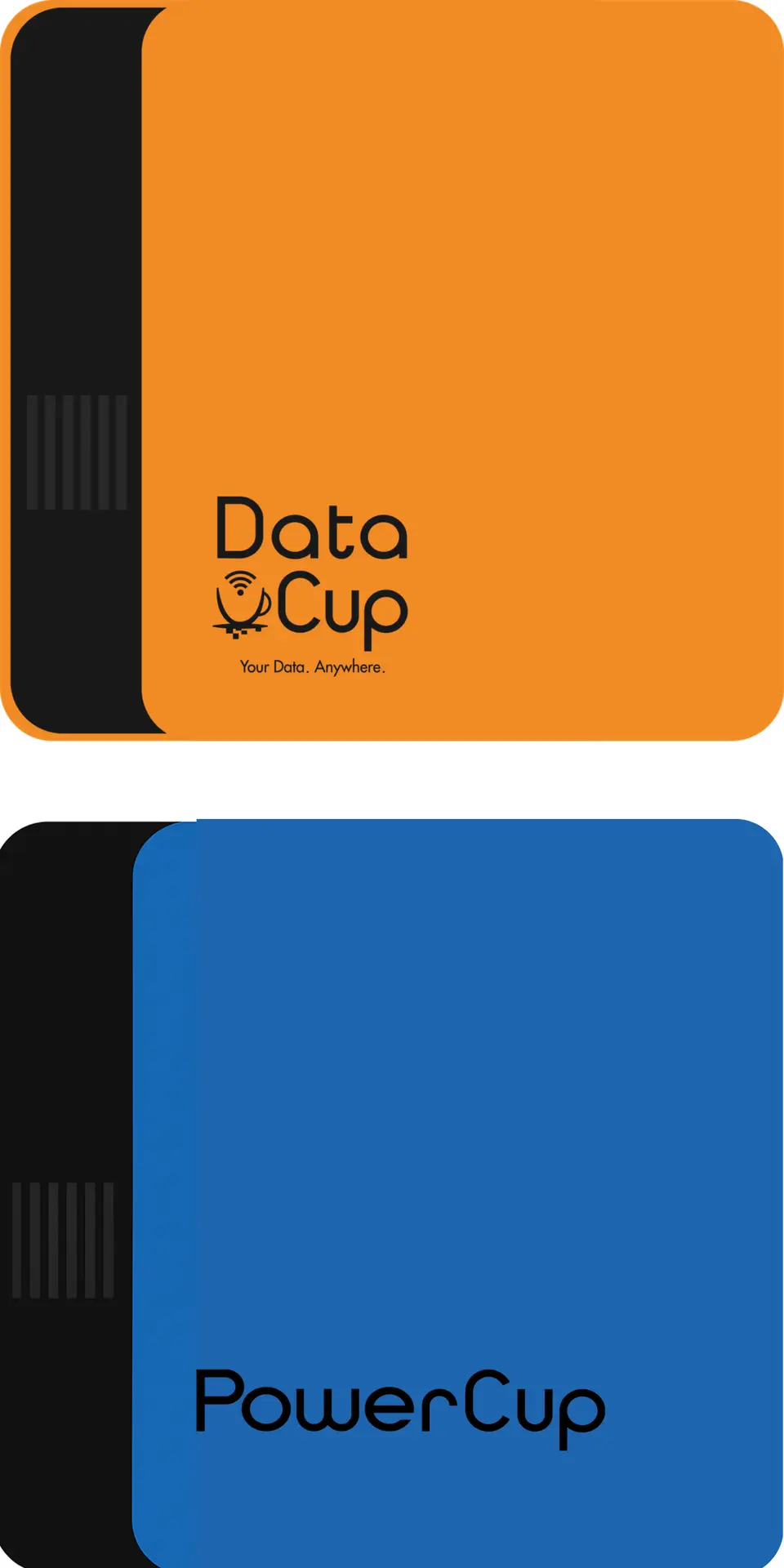
3 DataCup
3 PowerCup
Background
Building on the Mashamba project in the Democratic Republic of the Congo, the ENABEL Education teams sought to improve access to digital educational resources for elementary school teachers. For this pilot project, three DataCups and three PowerCups were acquired—standalone devices capable of delivering digital resources without an internet connection or electricity—tailored to the realities of the schools where the EduBase project is being implemented.
Le Projet vu par Enabel
"La plateforme DataCup s'implante dans les écoles"
Dans son bulletin opérationnel RdC de juillet-août 2026, Enabel revient sur l'atelier et les séances pratiques organisés pour favoriser l'appropriation des DataCups par ses partenaires éducatifs dans le Sud-Ubangi. Responsables éducatifs et directeurs d'établissement ont pu parcourir l'interface et prendre en main les box DataCup. Celles-ci vont ensuite être déployées dans les écoles élémentaires pour permettre aux enseignants de mieux préparer leur cours et aux élèves d'accéder à des ressources numériques éducatives.
Découvrir l'article complet...
(ajout du 25/09/2026)
The challenge: context-specific, locally developed resources tailored to the Republic of the Congo’s school curriculum
DataCup’s current database on education does not reflect the local realities of the Democratic Republic of the Congo for several reasons:
- the digital resources do not yet exist, or
- Digital resources are not distributed under an open-source license.
In fact, the teaching and educational resources available in our collection were mostly developed in Western countries, such as France: the Congolese school curriculum differs significantly from those of other countries. In mathematics, for example, students work with Congolese francs rather than euros; the units of measurement, cultural references, and subjects are specific to the DRC. It was therefore essential to provide official, local resources that could be used directly in the classroom.
To this end, ENABEL Education has partnered with the Ministry of Education of the Democratic Republic of the Congo, which has produced numerous digital resources for teachers.
Our role: structuring access to knowledge
It was in this context that ENABEL Education turned to us for our expertise in document management. We took action in two areas:
Choosing software:
For several years now, we have been using Omeka S (open-source software designed for managing and showcasing digital collections) as our go-to tool for this type of project. Its modular design and ease of deployment make it a solution that is particularly well-suited to the DataCup environment.
Omeka S also offers a key advantage for long-term archival projects: it is interoperable and complies with international metadata standards (Dublin Core, OAI-PMH), ensuring that cataloged resources can be exchanged, harvested, or integrated into other systems in the future: a guarantee of sustainability and openness for ENABEL and the Ministry of Education.
Building a model library:
We have selected and cataloged 100 digital resources chosen for their educational value and diversity: children’s stories (African Storybook), educational cartoons (Ubongo), textbooks (Sésamath), podcasts (Les Chouettes Conférences), teaching kits (UNESCO), and more.
This library serves primarily as a cataloging model: it demonstrates how to organize resources by level, subject area, document type, target audience, type of educational resource, and so on, so that ENABEL teams can then integrate all official resources produced by the Ministry into it, leveraging a proven document architecture.
The project distinguishes between two levels of use. Behind the scenes, detailed cataloging (metadata, indexing, collection structuring) is designed for library staff who populate and maintain the library. Certain metadata, such as coverage of the Sustainable Development Goals, is particularly useful to project managers for monitoring and reporting, but is not intended to appear in the teachers’ interface. On the front end, we are therefore developing a streamlined frontend interface (also known as the public site), tailored for teachers: simple and intuitive navigation, free of library jargon and superfluous information, allowing them to quickly find the resources they need for their classrooms.

Khan Academy is available on Kolibri:
At the request of ENABEL Education, we have also preloaded Khan Academy—available offline in Kolibri on the DataCups—to provide immediate access to thousands of interactive lessons and quizzes in both math and science, for all grade levels.
What happens next?
The next step is the transfer of expertise: supporting ENABEL teams in populating the library with ministry resources.
 We would like to thank the ENABEL teams for their trust.
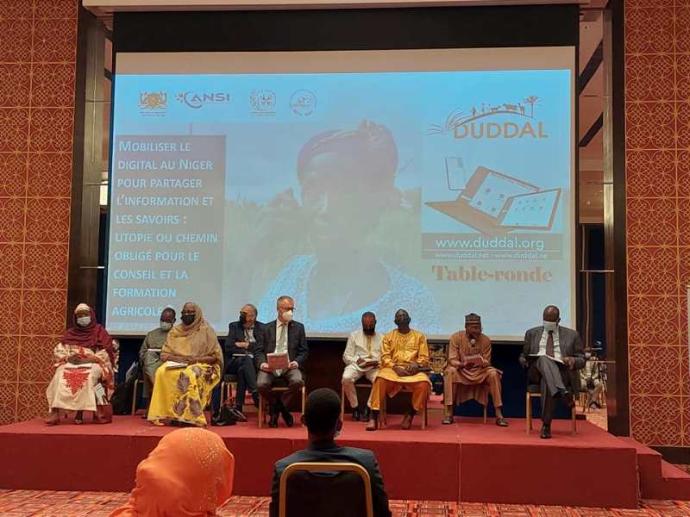 Duddal
DataCup is partnering with the Duddal project to help train farmers in Niger.
 SOS Villages d'Enfants Niger
DataCup helps enhance digital learning for children in Niger.
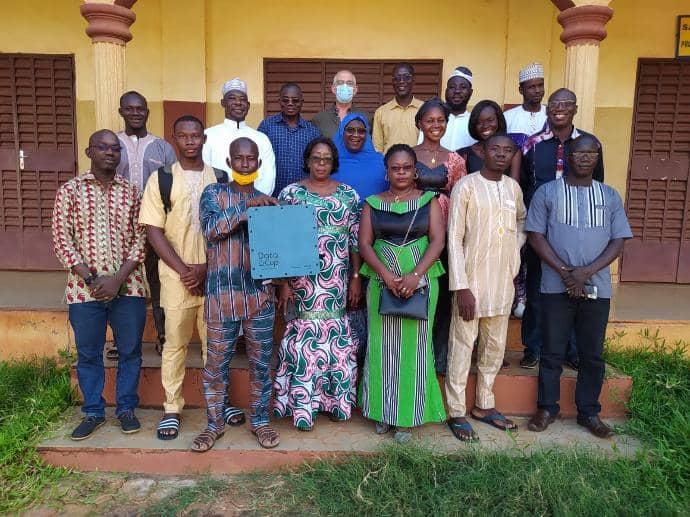 As Salam
DataCup is equipping the AS Salam School in Burkina Faso to support training efforts.
 Combifarm
DataCup is presenting its first data collection project using its IoT capabilities in a research setting at a pilot farm in Morocco.
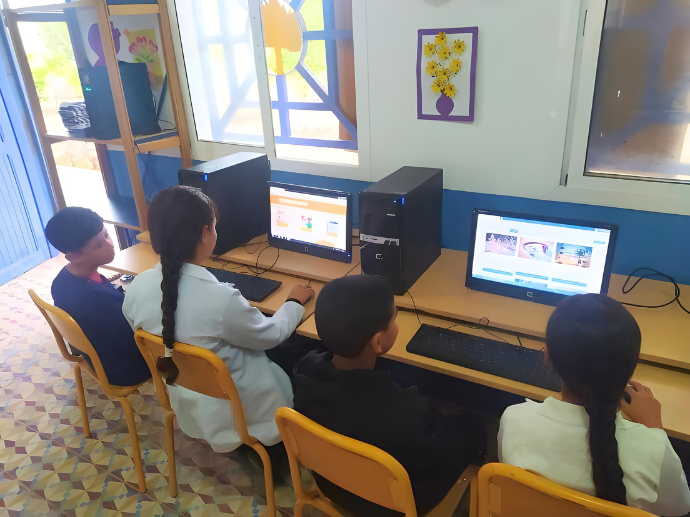 Elementary Schools Medersat.com
Find out how teachers are using the Datacup to organize introductory digital workshops for students ages 6 to 11 to overcome limited internet connectivity.
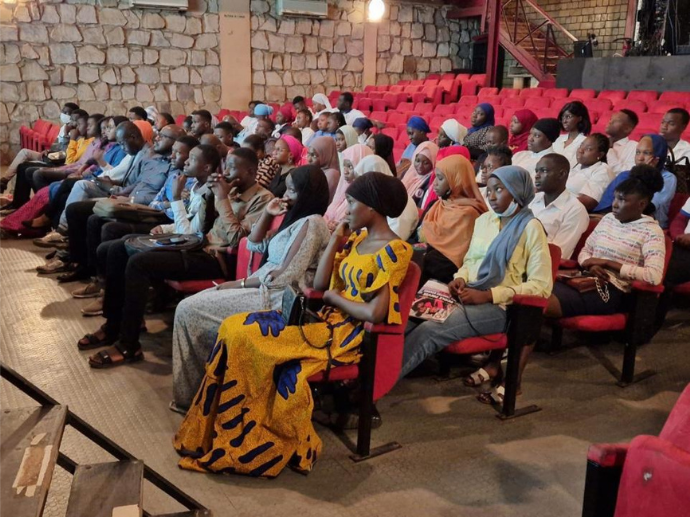 Malibox
Learn more about how the Culture Library has been integrated into DataCup to organize arts workshops for young people, in conjunction with the document review.